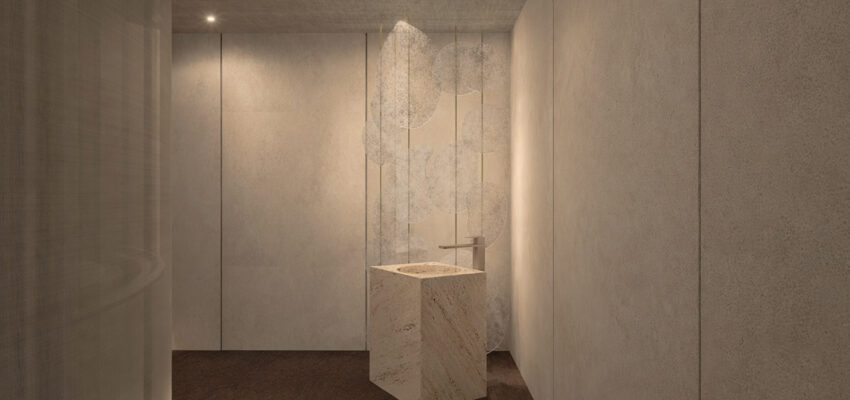
Do you dream of buying a stall in Bordeaux and transforming it into a modern and functional living space? It’s an exciting project, but one that comes with its share of challenges. Renovating a Bordeaux stall requires specific expertise to preserve the charm of these iconic houses while incorporating modern standards of comfort. From optimizing space to managing light and complying with urban planning regulations, a specialized interior designer can guide you through this project. This article provides an overview of the key points to consider for the successful renovation of your future Bordeaux home.
The stall, symbol of Bordeaux
History and origin
The stall, a type of house emblematic of Bordeaux, owes its origins to the workers and craftsmen who shaped the city in the 19th and 20th centuries. In the past, these modest dwellings served as both family homes and craftsmen’s workshops, as evidenced by their simple, often symmetrical facades. Built from cut stone or rubble stone, these houses are characterized by their simple, functional architecture. They form the backbone of many working-class neighborhoods in Bordeaux, their walls telling the story of a way of life that is uniquely Bordeaux.
Current strengths
Today, the stall is highly sought after for its authentic charm and potential. Its elegant stone facade, small interior garden or paved courtyard, and compact layout make it an ideal backdrop for a renovation project. The basic layout, with a long hallway leading to the rooms, offers interesting flexibility for redesigning the spaces. These houses often benefit from good orientation, creating bright and pleasant living spaces. They represent an excellent opportunity to acquire a property with character and modernize it to your taste.
The challenges of renovating a stall
Space optimization
The main challenge when renovating a Bordeaux stall is its narrowness. The interior space is often limited and linear. It is essential to optimize every square foot to create functional rooms without cluttering them. Smart design solutions, such as custom-made furniture, built-in storage, or opening up partitions, are essential for maximizing the available space and improving flow. An interior designer in Bordeaux is the ideal person to help you rethink the layout and breathe new life into your home.
Light management
The row of stalls can make the rooms in the center dark. Managing natural light is therefore a major challenge. It is often necessary to knock down walls to create open spaces, such as a large living room-kitchen, or to install skylights or light wells to bring light into the heart of the house. Choosing light colors and bright materials (such as light wood or polished cement floors) are also effective ways to visually enlarge rooms.
Insulation and modern comfort
Old stalls often suffer from thermal and acoustic insulation problems. A complete renovation must include insulation work (walls, floors, roof) to ensure optimal comfort and reduce energy bills. Heating, ventilation, and electrical systems also need to be modernized. This fundamental work is invisible once the project is complete, but it is crucial for making your shop a comfortable home that is suited to modern life.

Project Comines
Rules to follow during a renovation
Respect for facades
The façade of a stall is an architectural feature in its own right, protected by Bordeaux’s Local Urban Development Plan (PLU). Renovation work must often be carried out in keeping with the original character of the building. This includes the choice of materials and the preservation of openings and decorative elements. Before starting your project, it is essential to check with the town hall to find out the rules in force and avoid any unpleasant surprises.
Extensions and elevations
To compensate for the lack of space, many owners seek to expand their stalls. Rear extensions or adding an extra floor are the most common solutions. However, these works are strictly regulated. Adding a floor to a stall can be complex and requires a building permit. An extension must also blend in harmoniously with the existing architecture. The help of an architect is invaluable in designing a project that complies with the rules while meeting your needs.
Thermal and electrical standards
Any major renovation must comply with current building standards, in particular the 2012 Thermal Regulations (RT 2012) or the future RE 2020 (2020 Environmental Regulations) if the added surface area is significant, as well as current electrical standards (NF C 15-100 standard). These standards guarantee the safety and energy performance of your future home. A professional will be able to advise you so that your work is compliant and sustainable.

Project Vavin
Customized layout solutions
Open and fluid spaces
One of the most common tips for renovating a stall is to create a large open living space. By knocking down the wall between the living room and kitchen, you can create a single, bright, and welcoming room. This layout promotes circulation and gives the impression of a much larger space. Installing a central island in the kitchen helps to define the space without closing it off.
Custom storage solutions and contemporary elements
In a home with limited space, storage is key. Interior designers can create custom solutions that optimize every nook and cranny: cupboards under the stairs, wall-to-wall bookshelves, walk-in closets in bedrooms, etc. Incorporating contemporary elements such as interior glass roofs, sliding doors, and polished cement floors, while preserving the charm of stone and wood, creates a harmonious dialogue between old and new.

Project Voltaire
Why choose a specialized interior designer in Bordeaux?
Knowledge of old buildings
An interior designer specializing in stalls renovation has in-depth knowledge of the architecture of these buildings. They are accustomed to working with old buildings and know how to modernize them while preserving their authenticity. Their expertise is a major asset for the success of your project.
Qualified local craftsmen
Working with a local professional also means benefiting from a network of qualified and reliable craftsmen. The architect is used to working with Bordeaux-based companies that have mastered the specific techniques involved in renovating stalls: masonry, carpentry, etc. This guarantees a high-quality project, carried out by skilled and detail-oriented professionals.
Administrative procedures
A stall renovation project, especially if it includes an elevation or extension, often requires complex administrative procedures (preliminary declaration of works, building permit). An interior designer can assist you with these procedures and compile the necessary files, saving you valuable time and avoiding mistakes that could delay your project.
Conclusion
Renovating a Bordeaux stall is an exciting project that will allow you to create a unique home, combining the charm of the old with the comfort of the new. Although complex, renovating these houses can reveal unexpected potential, transforming a series of adjoining rooms into a bright and functional home. To carry out your project successfully and ensure a result that meets your expectations, it is essential to call on an expert. Are you looking for an interior designer in Bordeaux to assist you with the renovation of your stall? To discover our projects and discuss your project, contact our team specializing in interior renovation in Bordeaux.